Pray for the Dead Online: Catholic Tradition and a Simple Way
16 November 2026 · Grace Cathedral
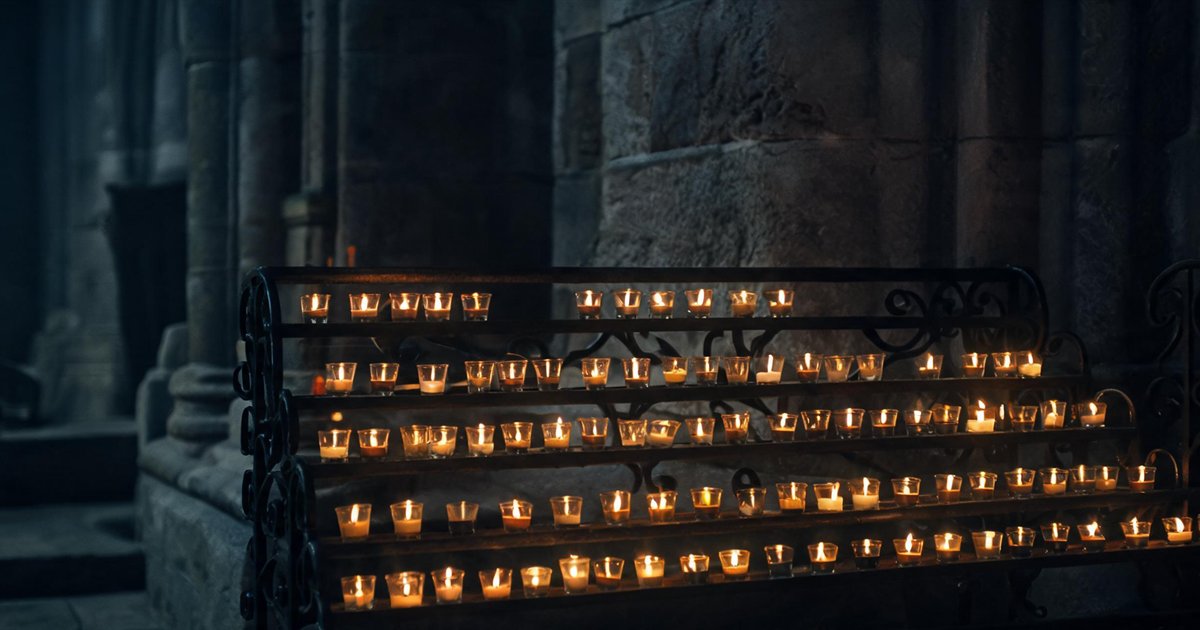
Grief keeps odd hours. It arrives at the kitchen table at midnight, on a train, in the ten minutes before a meeting starts — and often far from a church, a priest, or anyone who knew the person you have lost. To pray for the dead online is not a lesser version of praying in a building; it is the same prayer, said in the place where you happen to be. What follows is the tradition behind the practice, and a plain way to do it that does not require you to be eloquent.
What the Church Actually Teaches
Catholic prayer for the dead rests on a confidence that is older than any of our denominations. In the second book of Maccabees, Judas Maccabeus has sacrifices offered for soldiers who had died, and the sacred writer comments: "It is therefore a holy and wholesome thought to pray for the dead, that they may be loosed from sins." That sentence, roughly two thousand years old, is the root of the practice.
The Catechism puts the doctrine soberly. Those who die in God's grace but are not yet entirely purified undergo a final cleansing, which the Church calls purgatory — not a second chance, and not a courtroom, but the last work of mercy in a soul that has already said yes to God. Because the Church is one body and death does not sever the members from one another, our prayers can accompany them. This is what the Communion of Saints means in practice: the dead are not gone from us, only out of sight.
One thing follows, and it matters: prayer for the dead is an act of hope, not of fear. We do not know how our prayers are applied, and we are not told to calculate. We are told to keep praying.
Why Catholics Pray for the Dead Online
The first Christians prayed at the graves of the martyrs; later generations prayed in chapels, and then in churches filled with side altars and memorial plaques. Today those circumstances include a diaspora: people whose parish is in another country, people who are housebound, night-shift workers, the ill, and anyone for whom leaving the house to pray is not a small thing.
A screen is not a sacrament and does not pretend to be one. But a screen can hold a name, a candle, and a few quiet minutes — and for many people at many hours, that is the difference between praying and not praying at all.
How to Pray for the Dead Online, Step by Step
- Say the name. Begin with the person, not with the words. "Margaret. Robert. Anne." Grief becomes vague when we stop naming, and naming is something you can always do.
- Sit still for one minute. No phone, no scroll, no second tab. If a minute feels long, that is information, not failure.
- Pray the old prayer. "Eternal rest grant unto them, O Lord, and let perpetual light shine upon them. May they rest in peace. Amen." Four lines. It has carried millions of mourners.
- Add what is yours to add. One honest sentence. "I miss her." "I am sorry." "Look after him." You do not have to explain anything to God.
- Mark it with something visible. Light a candle in the nave, or write the name where it can be seen. The physical gesture is what keeps a prayer from evaporating.
A Simple Way to Pray for the Dead
If you want a shape longer than four lines but shorter than a novena, this is a good one to keep. Begin with the sign of the cross. Name the person, and anyone else who has died whom you carry. Read or recall a short passage — the raising of Lazarus, or "I am the resurrection and the life." Then pray the Eternal Rest three times, slowly, leaving silence between. Finish with an Our Father.
Some Honest Cautions
Nobody can sell you a better outcome. Be wary of any website or app that charges for prayer, implies that a donation shortens a soul's time in purgatory, or offers guaranteed results. If a site asks for money to pray for your dead, close the tab.
Do not turn the names into a ledger. There is a temptation, when a list gets long, to start counting instead of praying. A shorter list prayed slowly is worth more than a hundred names rushed through.
Prayer is not a substitute for care. If grief is making it hard to sleep, eat, or work, tell someone — a friend, a priest, a doctor. The Church has never regarded sorrow as something to be endured in silence, and asking for help is not a failure of faith.
You may be reading this on a bus, or in a hospital corridor, or at a desk at two in the morning. You can pray for the dead online right here, in the next minute, with the words you already have. The person you are thinking of is not a task to be completed. They are someone to be remembered, and remembering is prayer.
Related guides
- Building a daily habit of prayer online
- What a virtual memorial candle is actually for
- Praying on All Souls' Day, at home or at a grave
There is a candle in the Chapel of Remembrance, and a place to write a name.
Walk into the chapelGrace Cathedral · All guides · Light a candle for a loved one