Pray Online: Building a Real Prayer Life on the Internet
16 November 2026 · Grace Cathedral
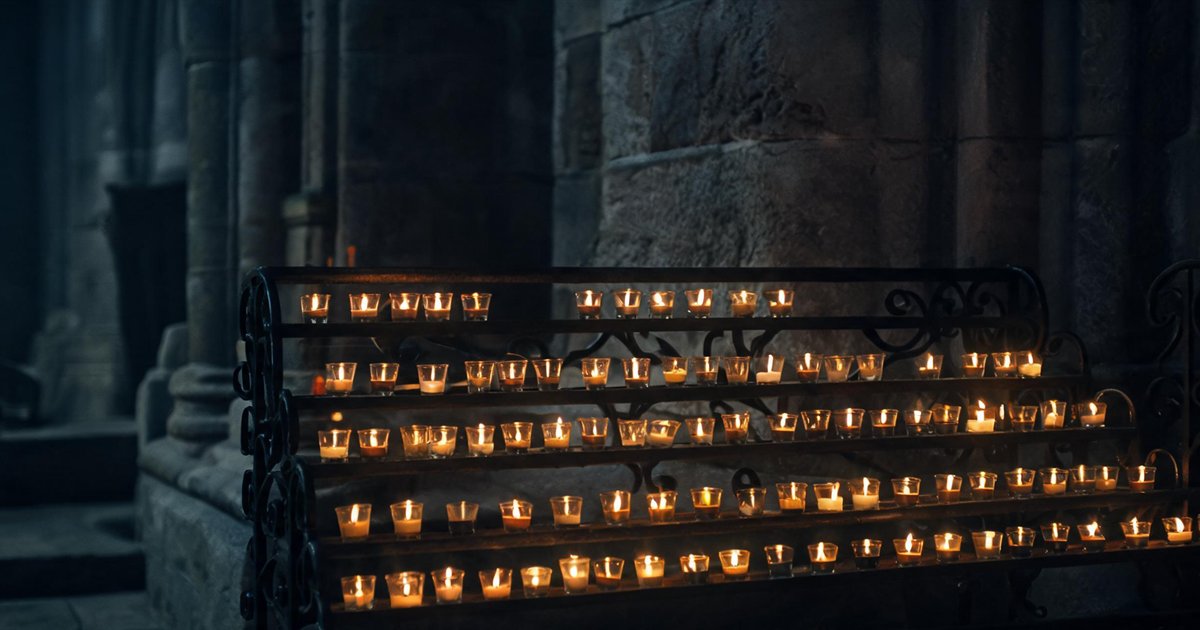
Most people who look for a way to pray online are not shopping for a technique. They are trying to find a time and a place: a few minutes that belong to no one else, in a day already carved up by work, care, or grief. The internet is where those minutes usually are, whether we like it or not. The question worth asking is not whether a screen can carry prayer — Christians have prayed with printed books and radios for generations — but what kind of prayer a screen tends to produce.
Why people pray online
The first reason is arithmetic. A person who works two jobs, cares for a parent, or lives an hour from the nearest parish does not have a free evening to spend in a church. They have eleven minutes before sleep. If those eleven minutes are the only ones available, the question is not whether they are ideal but whether they will be used. Praying online is one way of using them rather than losing them to a screen that was going to be there anyway.
The second reason is anonymity. Someone returning to prayer after twenty years may not want to walk into a parish and be greeted, questioned, or remembered. Someone grieving may not be able to say the name out loud in a room full of people. A screen offers a low threshold: you can begin without explaining yourself, and you can stop without anyone noticing. That is not a high motive, but it is an honest one, and many good habits begin at a low threshold.
The third reason is structure. Prayer is harder than it looks when you are tired. A page that says "pray for four minutes, begin with the sign of the cross, read this psalm, sit in silence" does something a blank room does not: it holds the shape while your attention wobbles. The Church has always used forms for this reason — the psalter, the rosary, the litanies, the Divine Office. A screen is simply another way of carrying a form.
None of this makes convenience a virtue. The internet is engineered to interrupt, and prayer is the one activity that cannot be done while half-attending. The honest position is that a screen is a tool with a strong bias, useful when it is used deliberately and corrosive when it is used passively. The rest of this guide is about the deliberate use.
Praying online without distraction
Start by admitting the design problem. The device you are praying on was built by people who are paid to keep you on it. Notifications are not accidents; they are the product. So if you intend to pray online, the first work is not spiritual but architectural: remove the exits. One tab. Airplane mode, or at least every notification silenced. A closed door, if there is one. The point is not a perfect environment but fewer ways for the environment to interrupt you.
Then give the body something to do. Sit up rather than lie down. Put both feet on the floor. Begin with the sign of the cross, said slowly, because a physical gesture marks a beginning in a way that opening an app does not. If you are on a phone, hold it with both hands and keep it still. If you are on a laptop, close every other window before you begin, not after the first distraction.
Fix the length in advance. Seven minutes, or one decade of the rosary, or a single psalm read twice. A prayer time without a boundary tends to dissolve into scrolling, and a boundary that is too ambitious tends to be abandoned. When the time is finished, stop, and do not check anything before you stand up. The ending is part of the prayer.
You will still be distracted. The monastic tradition has a proverb for this: always we begin again. Distraction is not proof that you are bad at prayer; it is the ordinary condition of a human mind, and the return is the prayer. Come back without scolding yourself and without restarting the whole exercise. And beware the subtler trap: reading about prayer and collecting prayers is not praying. At some point the tab has to close and the sentence has to be said.
A simple daily pattern
The best pattern is short, fixed, and dull enough to survive a bad week. Four moments will do: morning, midday, evening, and the last minute before sleep. None needs to be long. The oldest structure for praying online is not an app's dashboard; it is the rhythm of the hours, which the Church kept long before anyone owned a phone.
- Morning, two minutes. An offering of the day before it begins: "Lord, I give you this day, my work, my patience, and the people I will meet." The Morning Offering comes from the nineteenth-century Apostleship of Prayer, and its logic is simple: the day is decided before it starts.
- Midday, three minutes. The Angelus, at noon, with its three verses and the Hail Mary. In Eastertide the Regina Caeli replaces it. If you are at a desk, stand. The pause in the middle of the day is the point, not the words.
- Evening, five minutes. The examination of conscience, in four steps: ask for light, give thanks for two specific things, look honestly at where you failed, and resolve one small thing for tomorrow. Then one act of sorrow. This is the Ignatian method stripped to its bones.
- Night, one minute. One psalm, read slowly. Psalm 4, Psalm 91, or the short Psalm 131 — "I have stilled and quieted my soul". Then sleep. You are not required to feel anything.
If you miss a day, resume the next day rather than reconstructing the lost one. If you miss a week, begin again at morning. Sunday is different: it belongs to the Mass, and the pattern above is a support for that, not a substitute. On Sundays, add the readings of the day; they take four minutes.
Praying for the dead when you cannot attend a funeral
Distance, money, illness, estrangement, and closed borders all keep people from funerals. So does the paralysis that can arrive when a public ritual feels impossible. The Church does not treat absence as a failure of love. What she offers is a set of prayers that can be said anywhere, at the same hour, by anyone.
A Catholic funeral has three stations: the vigil or wake, the funeral Mass, and the committal at the grave. Each has a counterpart you can keep at a distance. At the hour of the vigil, read the psalms and stay with the memory deliberately. At the hour of the Mass, ask a parish to offer a Mass intention — a small offering is customary and goes to the priest's support, not to the dead. At the hour of committal, say the Eternal Rest and then do something with your hands: a candle, a card, a photograph set where you will see it.
The theology matters here, because it is widely misunderstood. When you pray online for someone who has died, you are not talking to them. You are asking God to be merciful to them. The Church forbids necromancy and divination — attempts to summon or consult the dead — and the prohibition is not a piece of religious bureaucracy. It protects the dead from being used and the living from confusing grief with a channel. Prayer for the dead is an act of hope addressed to God, not a conversation with a ghost.
If the person who died was not Catholic, or there was no funeral at all, you may still pray. The Church's funeral rites presume baptism, but God's mercy is not limited by our rites, and the tradition has always encouraged prayer for all the faithful departed without adjudicating anyone's eternal state. Keep the anniversary. Keep the birthday. A memorial candle that stays lit for thirty days does that, and the public memorial wall holds the names people have chosen to make visible. For the longer tradition, see the guide to praying for the dead online.
Novenas and set prayers online
Set prayers are not a lower form of prayer. They are what the Church gives you when you cannot compose anything yourself: the psalms when you are angry, the rosary when you are scattered, the litany when you are afraid. A form also protects you from prayer that becomes entirely self-expression. The words of the Church are wider than your mood, and praying them stretches the mood to fit.
A novena is nine days of prayer for one intention, and it is the most useful set form for anyone who wants to pray online with some continuity. One intention, one fixed time, nine days, a visible way of keeping count. It is old, unglamorous, and effective at exactly the thing most online prayer lacks: continuation. The guide to novenas explains the history and gives a simple form you can start tonight, and the Christmas novena shows how the same shape is used in December.
The rosary is the most portable of the set prayers, and it survives a screen better than most. You can pray it with an audio recording, with a video, or while walking a 3D nave and stopping at each side chapel. The rhythm does the work; the mystery gives the mind somewhere to rest. The Divine Office, or Liturgy of the Hours, is also widely available now, and lay people have always been free to pray it — not as an obligation, but as a share in the Church's own prayer.
Two cautions. First, beware of streak mechanics. An app that rewards consecutive days, sends guilt-inducing reminders, and turns prayer into a metric is forming you to its dashboard rather than to God. Second, never pay for a guaranteed novena or a "powerful" prayer package. Prayer is not a product, and a site that sells outcomes has already told you what it thinks prayer is.
Praying with others at a distance
The simplest form is a family rosary over a video call. Ten minutes, one mystery, one person leading and the others responding. Keep it short enough that children can stay, start on time even if someone is late, and end on time. The call is not the prayer, but it can carry the prayer, and the sound of another person's voice saying "Hail Mary" is worth more than a lot of solitary reflection.
A shared novena works the same way: one intention agreed in advance, one person posting the prayer each morning, everyone praying it wherever they are. At the end, someone says so plainly: "That is nine days. Thank you." The discipline of a group is often the only thing that keeps a private intention from evaporating by day three. If you use a 3D chapel, agree on an hour and walk to the same side altar.
There is a promise in the Gospel that people quote at this point: "Where two or three are gathered in my name, there am I in the midst of them." It is a real promise, and it is attached to agreement in prayer rather than to a particular room. But it does not make a video call a liturgy. The Church's public worship is regulated, and a group of friends praying a rosary together is devotional prayer, not the Mass.
When a screen is not enough
There are moments when praying online is the wrong tool, and it is better to say so than to pretend otherwise. Confession is the clearest case: absolution requires a priest who can hear you, and no app can supply one. Anointing of the sick requires oil and hands. The Eucharist requires a table. If you are dying, or someone you love is dying, a screen is not what the Church wants to give you; she wants to send a priest.
Touch is the second case. Grief and fear are bodily states, and they are often comforted bodily: a hand held, a meal brought, someone sitting in the same room without saying anything. A screen can hold a conversation but not a hand. If you are able to be with the person, be with the person. The prayer can wait; the presence cannot.
The third case is crisis. If grief is making it hard to eat, sleep, or work, or if you are having thoughts of harming yourself, the right next step is not another devotional article. Tell someone you trust, call your doctor, or contact your local emergency number. The Church has never treated sorrow as something to be endured in silence, and asking for help is not a failure of faith.
A related trap is scrupulosity. Some people, especially those prone to anxiety, use online examinations of conscience the way others use search engines at three in the morning: compulsively, and never reassured. If that is you, stop using the checklist and talk to a priest in person. The sacrament of reconciliation is medicine for exactly this, and it is not available through a screen. When the screen has done its work, it should hand you back to a parish — and if you want a place to begin, the guide to an online chapel and the Advent prayer guide both assume you will eventually walk into a real one.
Questions people ask
Can I pray this way instead of going to Mass?
For devotional prayer, yes — a psalm, a rosary, or a few quiet minutes are good anywhere. For the Mass, no. The Eucharist is a sacrament that requires a priest, a table, bread and wine, and people who are physically present. If you cannot attend, you are not obliged to, and watching a livestream is not the same as participating.
Is a guided prayer app better than praying without one?
It depends on what you need. A guided prayer can carry you through a dry evening and teach a form you did not know. It can also become a performance, where finishing the audio matters more than the prayer. Use it when it helps and put it down when it starts to become the point.
Should I pay for online prayers or novenas?
No. Prayer is not a service with a price, and no honest site will charge for a novena, a candle, or an intention. Donations that support a real community are different from fees that promise a spiritual result. If a site implies that payment improves the outcome, close it.
Can non-Catholics pray alongside Catholics online?
Yes. Devotional prayer is not restricted, and many people pray with Catholics while they are still deciding what they believe. You should not present yourself for Communion if you are not in communion with the Church, but you are welcome to pray, to listen, and to ask questions.
How long should an online prayer time last?
Long enough to arrive, short enough to repeat tomorrow. Five to ten minutes done daily will form you more than an hour attempted once a month. If you are grieving or very tired, two honest minutes are enough. The length is not the measure; the return is.
If you take one thing from this guide, take the four moments: morning, midday, evening, night. Put them in your phone as quiet alarms with no message attached. When one of them sounds, close what you are doing, say the prayer, and go back to your day. That is what it looks like to pray online: not a lesser spiritual life because it happens on a screen, but a real one, built the way all real ones are built — a little at a time, mostly on ordinary days.
A quiet nave, fourteen side chapels, and a candle you can leave burning.
Walk into the chapelGrace Cathedral · All guides · The virtual church guide · Home