All Saints' Day: What It Is and How to Pray
16 November 2026 · Grace Cathedral
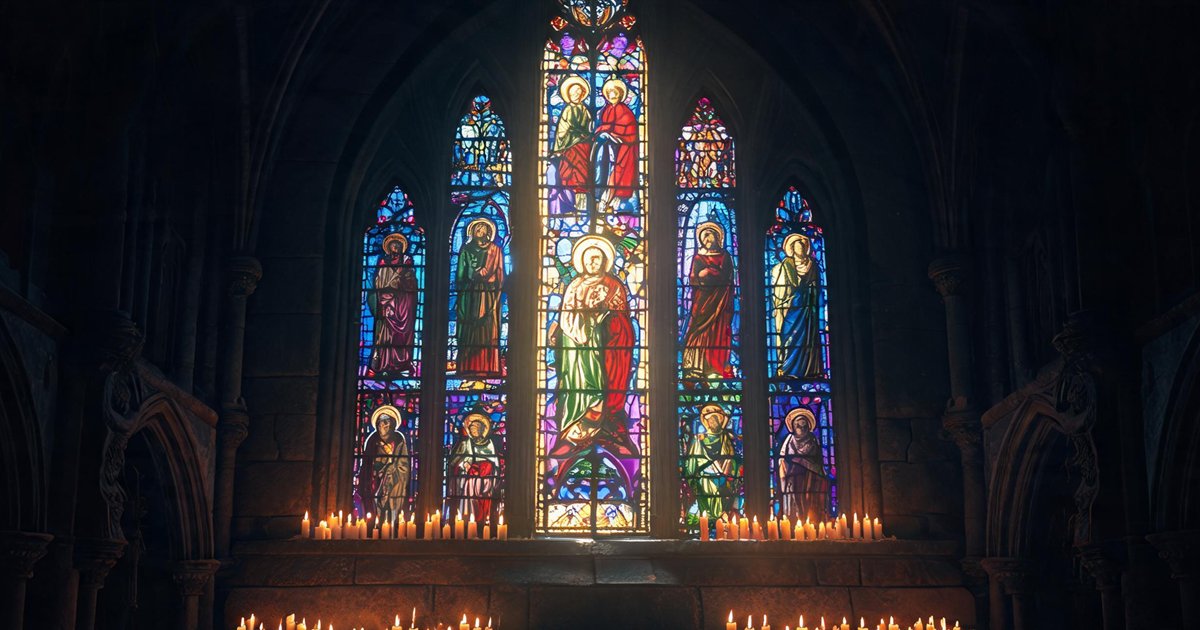
All Saints' Day falls on the first of November, and it is one of the few days in the year when the Church asks you to look at something larger than your own parish. An all saints day prayer is not a prayer to a crowd of strangers; it is a prayer prayed in the company of people who finished the journey you are still on. The day has a fixed date and a fixed intention, and it rewards twenty quiet minutes more than any particular formula.
What All Saints' Day Actually Is
November 1 is the Solemnity of All Saints, a holy day of obligation in many dioceses. In the older calendars the feast was chiefly about the martyrs, but the Church widened it: today it honours every one of the blessed in heaven, canonised or not. The canonised saints have names, statues and feast days of their own. The rest — the grandmother who prayed badly but faithfully, the stranger in the next pew, the person whose name nobody remembers — are celebrated together, on one day, without a list.
The Mass readings for the day are not about particular miracles. They are the Beatitudes, Matthew's list of the blessed, read aloud over everyone standing in the church at once. If you have ever felt that sanctity is for other people, November 1 is the day the Church answers you directly.
Where the Feast Comes From
The feast is ancient in the East and arrived in the West by a long road. In Rome, a commemoration of all martyrs was kept in May; when the old Pantheon was given to the Church in the seventh century it was dedicated to Our Lady and the martyrs, and its May commemoration became famous. In the eighth century the feast was moved to November 1, and by the ninth it was fixed there for the whole Latin Church.
November was not accidental. It stands at the edge of winter in the northern hemisphere, when the harvest is over and the days shorten, and it sits directly before All Souls' Day on November 2. The Church placed the two days side by side on purpose: first the glory, then the mercy. One day for those who have arrived, one day for those still being purified.
All Saints' Day Prayer: The Litany and the Silence
The traditional all saints day prayer of the Church is the Litany of the Saints, sung at the Easter Vigil and at ordinations, and a strange and beautiful thing to hear. Names are called, and after each one the whole congregation answers, "pray for us." Mary, then the apostles, then the martyrs, then bishops and doctors, then the founders of religious orders, then the unnamed. The list is long enough that you stop listening to the words and simply stand in the procession.
At home you do not need the whole litany. Two sentences and a pause are enough:
All holy men and women, known and unknown, pray for us. You finished what I am still learning to begin. Ask for me the grace to keep going, and to want what God wants even when I do not understand it. Amen.
Then sit in silence for a minute. The silence is not a gap in the prayer; on this day it is the point. You are praying with people you cannot see, and the only way to notice them is to stop talking.
Keeping the Day Well
A few customs have survived, and they are worth keeping because they are physical. Go to Mass if you can, even on a weekday evening. Visit a cemetery, if there is one nearby, and walk it slowly rather than driving past. Light a candle — at the graveside, on a windowsill, or on the candle rack in a church. In many countries the evening of November 1 finds the whole cemetery lit with small flames, which is a more eloquent sermon than most homilies.
If you have children, let them hold the candle and say one name. If you are alone, say the names aloud. The communion of saints is a habit of speech, learned by using it.
Praying All Saints' Day Prayer When You Cannot Get to Church
Distance, illness and night shifts are real obstacles, and the day does not lose its character because you keep it from a desk. Open the cathedral, walk the nave and stop at one of the side chapels. Light a candle there for a saint you actually admire rather than one you think you should admire, and let the flame stand for the day. If the person on your mind has died rather than been canonised, the guide to praying for the dead online is the better companion for November 2, and the short piece on lighting a memorial candle explains the small etiquette of doing it well. The whole of November, in fact, is traditionally given to prayer for the dead; All Saints' Day opens that month rather than closing it.
So an all saints day prayer is finally a prayer of company. It says: I am not the first person to try this, and I will not be the last, and the ones who came before me are not gone from the Church but ahead of me in it. You do not need a litany book to pray it. You need one name, one candle and a minute of silence on the first of November.
Related guides
- Walking a virtual church, chapel by chapel
- All Souls' Day and its candle for the dead
- How to light a candle online for the feast
Keep the feast with a flame of your own. The chapels are open all night.
Walk into the chapelGrace Cathedral · All guides · Prayer for the dead